
Vizag Steel TMT Rebars
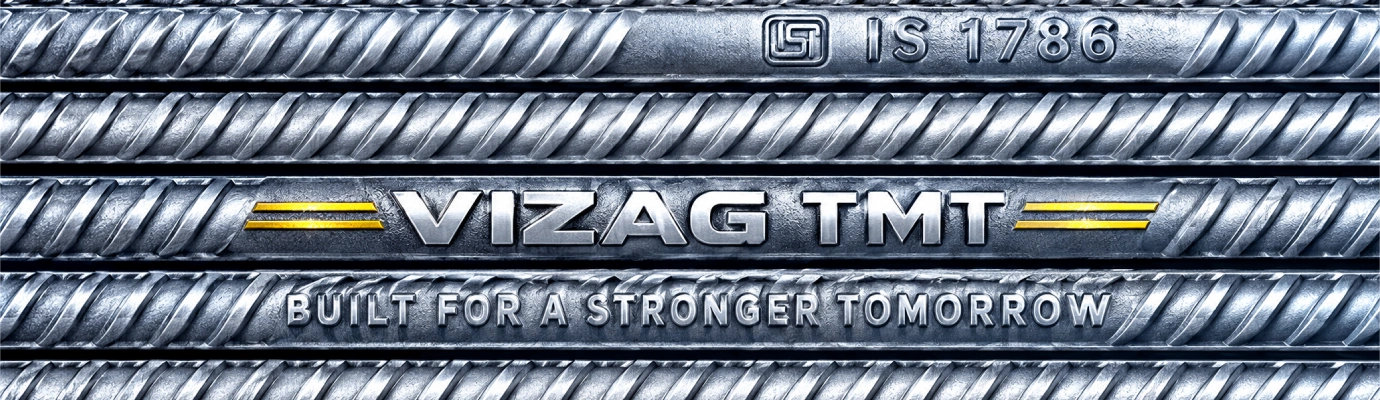
Vizag Steel TMT Rebars Dealers in Hyderabad
Vizagsteel provides Vizag Steel TMT Rebars in Hyderabad for residential, commercial, industrial, institutional, and infrastructure construction requirements. TMT reinforcement bars are used within reinforced concrete structures to provide steel reinforcement according to structural design requirements. Customers can enquire about suitable grades, diameters, quantities, and delivery requirements based on project drawings and material specifications.
For construction projects, choosing the appropriate reinforcement steel involves evaluating the required grade, bar diameter, structural application, quantity, applicable standards, and project conditions. Material selection should follow the reinforcement schedule and specifications prepared by the structural engineer. The TMT bars made with Vizag steel have good ductility and flexibility. Fit for a range of construction needs
What Are Vizag Steel TMT Rebars?
Vizag Steel TMT Rebars are thermo-mechanically treated reinforcement bars associated with the Vizag Steel/RINL product range. These bars are designed for use as reinforcement in concrete structures where steel is required to provide tensile reinforcement. Their ribbed or deformed surface helps create mechanical interaction between the reinforcement and surrounding concrete.
TMT rebars are selected according to factors such as steel grade, nominal diameter, structural member, reinforcement requirement, and applicable product standards. The correct combination of grade and size depends on the engineering design rather than a single standard size being suitable for every construction project.
How Do TMT Rebars Work With Concrete?
Concrete is strong in compression, while reinforcement steel is incorporated into concrete structural members to address tensile stresses. TMT bars are positioned according to structural drawings and reinforcement detailing.
The ribs on the bar surface help provide mechanical interaction with concrete. Proper reinforcement placement, concrete quality, bar spacing, anchorage, lap lengths, cover, and construction practices are also important for the overall performance of an RCC structure.
Why Is TMT Steel Used in Construction?
TMT reinforcement is widely used because it provides the specified mechanical properties required for reinforced concrete applications. Depending on the selected grade and project requirements, reinforcement bars can be incorporated into different structural components.
Why Are TMT Rebars Used in RCC Construction?
TMT rebars are used in RCC construction to provide steel reinforcement within concrete structural members. They work with concrete as part of the engineered reinforcement system used in foundations, columns, beams, slabs, retaining structures, and other RCC components.
Reinforcement in Structural Members
Steel bars are placed according to engineering drawings to provide the required reinforcement in individual structural members.
Interaction Between Steel and Concrete
The ribbed profile provides mechanical interaction between the reinforcement bar and concrete, helping the two materials function together within the designed structure.
Support for Different Construction Requirements
Different grades and diameters allow engineers to specify reinforcement according to structural calculations and project requirements.
Vizag Steel TMT Rebars for Hyderabad Projects
Construction companies, builders, contractors, developers, infrastructure organizations, and project procurement teams in Hyderabad may require reinforcement steel at different stages of construction.
The material can be considered for:
- Residential Buildings
- Apartment Projects
- Independent Houses
- Villas
- Commercial Complexes
- Office Buildings
- Industrial Buildings
- Manufacturing Units
- Warehouses
- Institutional Buildings
- Infrastructure Projects
- RCC Structures
The procurement requirement can be defined according to grade, diameter, quantity, project type, reinforcement schedule, and delivery location.
Construction Requirements in Hyderabad
For projects across Hyderabad and surrounding areas, material planning can vary according to the size of the structure, construction stage, reinforcement design, and estimated steel consumption. Contractors can prepare procurement requirements based on bar bending schedules, structural drawings, and project material estimates.
Key Features of Vizag Steel TMT Rebars
Ribbed Bar Profile
The ribbed or deformed surface provides mechanical interaction between reinforcement steel and concrete. This surface profile is an important characteristic of TMT reinforcement bars.
Multiple Product Sizes
TMT reinforcement products are available in different nominal diameters. The appropriate diameter should be selected according to structural calculations and reinforcement drawings.
Grade-Specific Performance
Different reinforcement grades have specified mechanical properties. The required grade should be determined according to the structural design and applicable product specification.
Suitable for RCC Construction
TMT reinforcement bars are used in reinforced concrete applications such as foundations, columns, beams, slabs, retaining structures, and other structural components.
Construction Versatility
The material can be incorporated into different types of construction projects, including residential, commercial, industrial, institutional, and infrastructure developments.
Project-Based Procurement
Reinforcement steel can be ordered according to project requirements, allowing contractors and procurement teams to plan material quantities based on construction schedules.
Benefits of Vizag Steel TMT Rebars
Effective Structural Reinforcement
TMT reinforcement provides steel reinforcement within concrete structural members according to the requirements established by structural design.
Mechanical Bond With Concrete
The ribbed surface helps create mechanical interaction between the reinforcement and concrete, supporting the designed reinforcement system.
Grade and Size Selection
Different grades and diameters allow reinforcement to be specified according to individual structural requirements.
Wide Construction Application
The material can be used across a range of RCC construction projects when the selected product meets the applicable specification.
Better Project Material Planning
Contractors can estimate requirements based on the reinforcement schedule, structural drawings, bar diameter, quantity, and construction stage.
Suitable for Bulk Procurement
Large construction projects may require substantial quantities of reinforcement steel. Project-based ordering can help procurement teams coordinate quantities and delivery requirements.
What Should Be Verified Before Procurement?
Construction buyers should verify the following information before placing an order:
- Product Grade
- Nominal Diameter
- Required Quantity
- Applicable Standard
- Mechanical Properties
- Test Certificate
- Batch/Heat Information
- Product Documentation
- Delivery Terms
- Product Availability
- Project Specification
- Billing Requirements
Buyers should compare the supplied material with the project specification and relevant documentation before accepting the material at the construction site.
Technical Specifications
The exact specification must be verified for the particular product, grade, and supply order.
Consider:
Product: Vizag Steel TMT Reinforcement Bars
Material: Reinforcement Steel
Profile: Ribbed / Deformed
Grade: According to Selected Product and Project Requirement
Diameter: According to Structural Specification
Application: Reinforced Concrete Construction
Usage: Foundations, Columns, Beams, Slabs and RCC Structures
Standard: Applicable Product/BIS Specification
Documentation: Product Test Certificate and Applicable Quality Documents
Important Technical Parameters
The final product selection can involve several technical considerations, including nominal bar diameter, grade, mechanical properties, dimensional requirements, applicable standards, and project-specific reinforcement details.
Technical information should always be checked against the relevant manufacturer's documentation and applicable standards rather than relying on generic online specifications.
Benefits of Vizag Steel TMT Rebars
Residential Buildings
TMT reinforcement can be used in residential RCC components such as foundations, columns, beams, slabs, staircases, and other structural members, subject to engineering specifications.
Commercial Projects
Commercial buildings, offices, retail developments, and other RCC structures can require reinforcement steel for their structural components.
Industrial Facilities
TMT reinforcement can be used in factories, manufacturing facilities, warehouses, industrial buildings, foundations, and associated civil structures where reinforcement steel is specified.
Institutional Buildings
Schools, colleges, hospitals, offices, and other institutional developments may require reinforcement steel as part of their RCC construction.
Infrastructure Projects
Infrastructure and civil engineering projects can use reinforcement bars in various concrete structures according to the project's engineering design.
Foundation Construction
TMT bars can form part of reinforcement arrangements in RCC foundations. The grade, diameter, spacing, and quantity are determined through structural calculations.
Vizag Steel TMT Rebar Requirements in Hyderabad
Local procurement requirements can vary according to project size, construction stage, reinforcement quantity, required product grade, bar diameter, and delivery schedule.
For a faster enquiry, customers can provide:
TMT Grade + Diameter + Quantity + Project Type + Hyderabad Delivery Location
For larger requirements, buyers can additionally provide a material schedule, bar bending schedule, or project-wise quantity requirement where available.
Bulk TMT Rebar Requirements
Large construction projects may require different bar diameters and quantities at different construction stages. Providing a detailed requirement allows procurement teams to organize material planning according to the project's construction schedule.
Delivery Requirements
Delivery planning can depend on the quantity ordered, project location, required delivery date, transportation arrangements, and site accessibility. These details can be discussed during the enquiry process.
Benefits of Vizag Steel TMT Rebars
Consider the Required Grade
The grade should match the requirements specified by the structural engineer and applicable standard.
Check the Required Diameter
Bar diameter is selected according to the reinforcement design for individual structural members.
Review the Reinforcement Schedule
The reinforcement schedule provides important information regarding bar sizes, quantities, spacing, and placement.
Verify Applicable Standards
The product should comply with the relevant specification required for the project.
Check Product Documentation
Test certificates and applicable quality documentation should be reviewed as part of material procurement and verification.
Consider Quantity and Delivery
The required quantity and project location should be communicated clearly so that supply and delivery can be planned accordingly.
Why Choose Vizagsteel?
Vizagsteel provides product-focused enquiry support for customers looking for Vizag Steel TMT Rebar Dealers in Hyderabad. Customers can communicate their required grade, diameter, quantity, project type, and delivery location when enquiring about reinforcement steel.
This approach helps construction companies, builders, contractors, developers, and procurement teams communicate their material requirements more clearly.
The selection of reinforcement steel should remain aligned with engineering specifications, applicable standards, project requirements, and relevant product documentation.Customers may choose reinforcement steel in accordance with their project requirements, specifications, and quantity needs thanks to the steel bars' variety of sizes and grades.
Vizag Steel TMT Rebar Buying Checklist
Before confirming an order, check:
- Required Grade
- Required Diameter
- Total Quantity
- Applicable Standard
- Test Certificate
- Product Documentation
- Delivery Location
- Transportation Terms
- Project Requirements
- Reinforcement Schedule
- Billing Details
- Supply Schedule
This checklist can help buyers organize their procurement requirements before requesting a quotation.
Frequently Asked Questions
What Are Vizag Steel TMT Rebars Used For?
Vizag Steel TMT Rebars are used as reinforcement in reinforced concrete structures such as foundations, columns, beams, slabs, residential buildings, commercial structures, industrial facilities, and infrastructure projects.
Which TMT Rebar Diameter Should I Buy?
The required diameter depends on the structural design, reinforcement schedule, structural member, loading requirements, and project specifications. A structural engineer should determine the appropriate diameter.
Are TMT Rebars Suitable for RCC Construction?
Yes. TMT reinforcement bars are commonly used in reinforced concrete construction where steel reinforcement is specified. The selected product must meet the applicable project and engineering requirements.
What Information Is Needed for a TMT Bar Enquiry?
Customers should ideally provide the required grade, bar diameter, quantity, project type, delivery location, and expected supply schedule. Providing a material schedule can be useful for larger requirements.
How Are TMT Bars Selected for Foundations?
Foundation reinforcement is selected through structural design. The engineer determines the required grade, diameter, spacing, quantity, anchorage, and reinforcement arrangement based on the project's structural requirements.
What Is the Importance of TMT Bar Grade?
The TMT grade identifies the specified mechanical characteristics of the reinforcement steel. The appropriate grade should be selected according to structural requirements and the applicable product standard.
